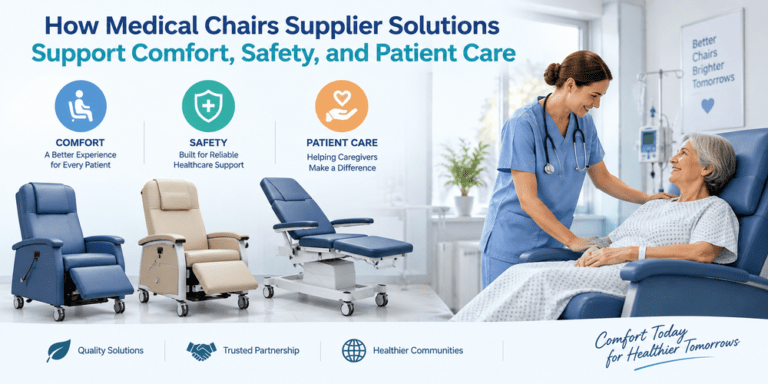
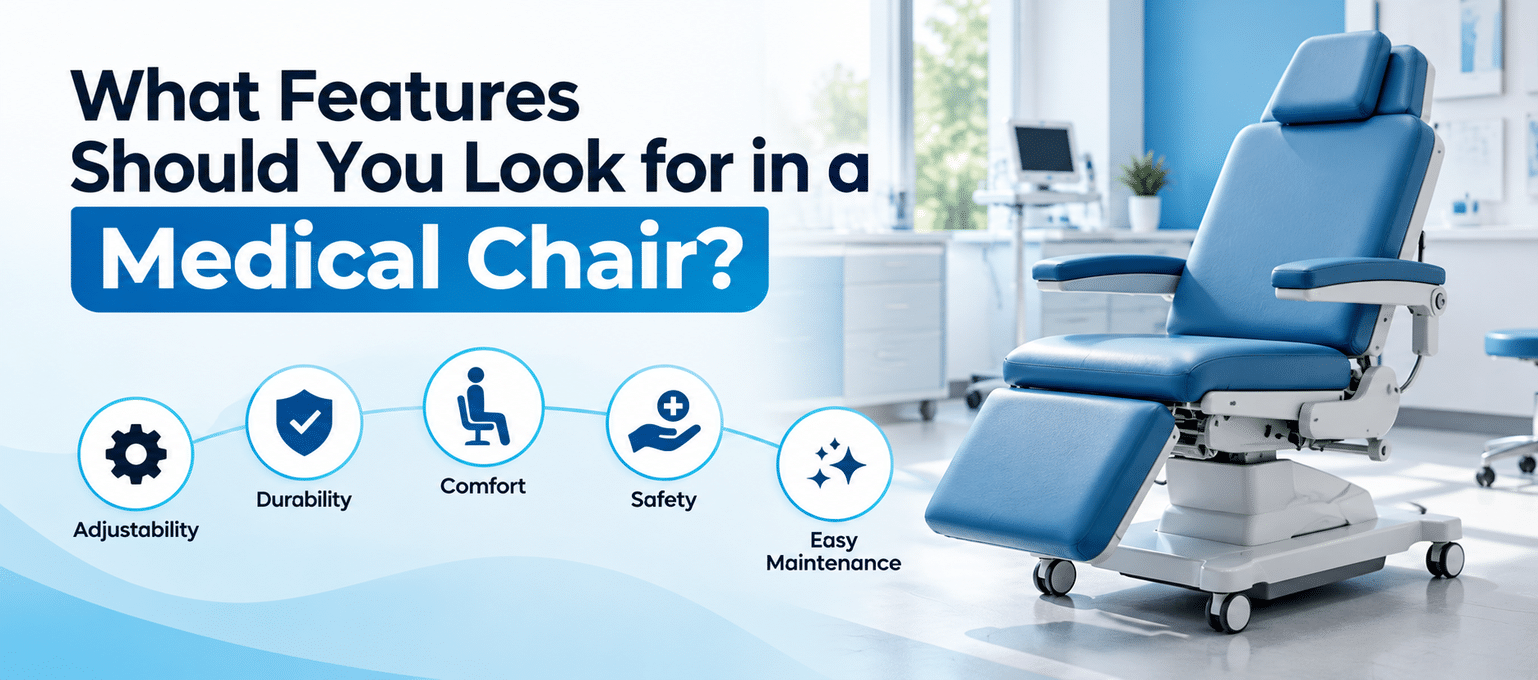
Picking the right Medical Chair is about more than comfort, but also about safety. In hospitals, clinics, dialysis centers, and rehab facilities, the chair really does impact patient safety, staff efficiency and the overall quality of care. If the chair is poorly designed it can lead to pressure sores, make transfers feel like a chore, and even slow down the procedures. Meanwhile a solid, well-built model supports recovery and helps reduce caregiver strain. So, whether you’re setting up a brand-new room or upgrading what you already have, working with a reliable Medical Chairs Supplier matters, because you want products that actually fit clinical standards. Here’s the stuff that tends to be the most important
Ergonomic Design and Patient Comfort
People in medical chairs can be sitting for hours, during treatments like chemotherapy, dialysis, or blood donation. So, you want contoured seating, supportive lumbar areas, and neck support, if possible, plus padded armrests that don’t feel like hard plastic. Solid ergonomics usually means better circulation, less fatigue, and patients that stay calmer and more cooperative. Also look at seat depth and seat width. If it’s too narrow, or too shallow, it can get uncomfortable fast and it can be unsafe too, especially with elderly patients, or bariatric patients. Adjustable headrests and footrests let you fine tune the setup for each individual person.
Adjustability and Positioning
The best medical chairs offer multiple positions, like upright, reclined, and Trendelenburg or Fowler positions when those are clinically needed. Look for:
- Electric or manual recline, (electric tends to be smoother and needs less effort from staff)
- Height adjustment, it makes transfers easier and helps caregivers avoid bending
- Adjustable armrests and leg rests, these can help with IV access, exams, and overall patient positioning
Easy one touch controls also help save time, and reduce the chance of small mistakes during busy shifts.
Durable, Hygienic Materials
Infection control is kind of a big deal in healthcare so the upholstery really can’t be treated like it’s “whatever”, you know. Go for medical grade vinyl or antimicrobial fabrics, that resist fluids, stains, and even the harsher disinfectants. Tightly stitched seams, or better yet seamless surfaces, can reduce the chance of bacteria hanging out in those tiny corners. For the frame, you want strength plus corrosion resistance, because things get cleaned a lot. Powder coated steel or aluminum usually works well, it’s durable without becoming ridiculously heavy. A chair that can handle everyday scrubbing and heavy use may end up lowering your replacement costs later on
Safety Features and Weight Capacity
Don’t just assume the weight rating is fine. Most medical chairs are usually rated around 130 to 180 kg, while bariatric models often support much more. So check the manufacturer’s capacity rating, and make sure it fits the patient group you actually work with.
Other safety features that are worth a look include:
- lockable castors or non-slip feet for stability
- an anti-tip frame layout
- armrests that lock down securely
- emergency release mechanisms on electric models
- smooth edges, so the chances of injury stay lower
Mobility and Maneuverability
In busy facilities, chairs are constantly getting pushed around, between rooms, wards, and treatment zones. Smooth rolling lockable castors make that a lot less painful. Compact designs help in narrow areas, and lighter frames reduce the physical effort when staff have to reposition furniture fast. Mobility also matters when the chair is part of a bigger setup. For instance, a hospital aiming to standardize patient rooms, treatment spaces, and nursing stations might prefer using one partner for the whole thing. A Trusted supplier, like a Hospital Beds Supplier, can help coordinate beds, mattresses, and chairs so heights match, compatibility is consistent, and cleaning procedures don’t turn into a whole different routine. That usually leads to a more uniform and efficient care environment
Easy Maintenance and Cleaning
If a chair is hard to clean, it won’t be cleaned properly, period. Look for removable cushions, wipe clean surfaces, and mechanical parts that are easy to reach. For electric chairs, confirm the motors are straightforward to service and that maintenance instructions are actually clear. Also ask about spare parts availability and the level of service support before you commit. Quick access to replacement components helps prevent long stoppages, and that keeps things moving in the facility. And yes, suppliers matter here too, like a Medical Mattresses Supplier, who can help align beds mattresses, and chairs for height compatibility and consistent cleaning protocols
Specialty Features for Specific Settings
Different departments tend to have different needs, so the chair should match the purpose:
- Dialysis and infusion chairs: padded recline, IV pole attachments, side tables
- Phlebotomy chairs: flip-up or swing-away armrests so access stays flexible
- Examination chairs: multiple positioning options for different procedures
- Recliners for recovery rooms: comfort first, plus easy transfers
- Waiting room and visitor chairs: durability and cleanability are usually the top priority
Some models also include built-in storage, cup holders, or power outlets, which can be helpful in long treatment sessions. Trusted suppliers, like a Stretchers Gurneys Supplier, can help align beds mattresses and chairs in terms of height compatibility and cleaning protocols.
Value, Warranty, and Supplier Reliability
Sure, price matters, but the cheapest option is rarely the best long-term. Compare total cost of ownership, including durability, maintenance, and warranty coverage. A strong warranty on the frame, upholstery, and electric components usually shows the manufacturer actually stands behind what they sell. And then there’s the supplier reliability. A dependable partner offers steady quality, fast delivery, bulk pricing, and after-sales support. If you’re outfitting an entire facility, it helps to pick a supplier who can also provide related equipment. For example, a Medical Carts Wholesale Supplier for medication supply and emergency carts, so you can handle procurement through one trusted source without constant back and forth.
Conclusion: Picking the Correct Medical Chair
A good Medical Chair brings together comfort, flexibility, cleanliness, safety, and long-lasting build into one solid item, honestly. You should look at what your patients actually need, how your department runs day to day, and where your budget sits. Then, compare each option against those same points above, even if it takes a little extra time to think it through. Doing it carefully helps with the patient experience, makes life easier for your staff and it often delivers better value over the longer run. If you want proven quality products and some expert help, mbkmed.com can be a dependable partner for medical furniture and equipment, with solutions that are made for modern healthcare locations.
Frequently Asked Questions (FAQs)
- What is the most important feature in a medical chair?
Patient comfort, along with safety, is the top priority. Prioritize ergonomic support, solid construction, and a weight capacity that fits your typical patient range.
- Are electric medical chairs better than manual ones?
Electric chairs usually give smoother adjustments and reduce staff strain, so they work well where things are busy. Manual chairs tend to be more affordable, and they fit lower use zones.
- Are electric medical chairs better than manual ones?
Electric chairs usually give smoother adjustments and reduce staff strain, so they work well where things are busy. Manual chairs tend to be more affordable, and they fit lower use zones.
- What material is best for medical chair upholstery?
Medical grade vinyl or antimicrobial fabric is usually the best call. It holds up under frequent cleaning, and it resists fluids too.
- How do I clean and maintain a medical chair?
Use approved hospital grade disinfectants on the surfaces, check castors and moving pieces often, and follow the maintenance routine from the manufacturer. Don’t just guess.
- What weight capacity should I choose?
Most standard chairs handle roughly 150 kg, though bariatric models go higher. Base your choice on your real patient demographics.
- Can one supplier provide chairs, beds, and mattresses?
Yes, many suppliers stock a full set of hospital furniture, which makes ordering simpler. It also keeps everything compatible across your facility, more or less.
- Do medical chairs come with a warranty?
Most solid manufacturers provide a warranty for the frame and mechanical parts. Still, it’s smart to confirm the exact terms before you purchase.
- How do I know if a medical chair meets safety standards?
Request certifications like ISO or CE, and ask your supplier for test documentation. That proof matters, even if it’s not always shown upfront.