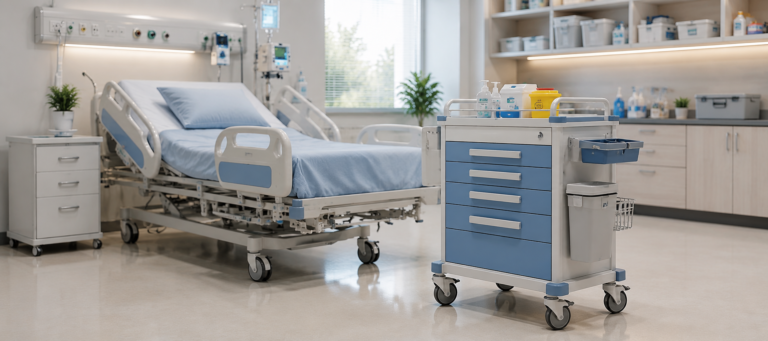
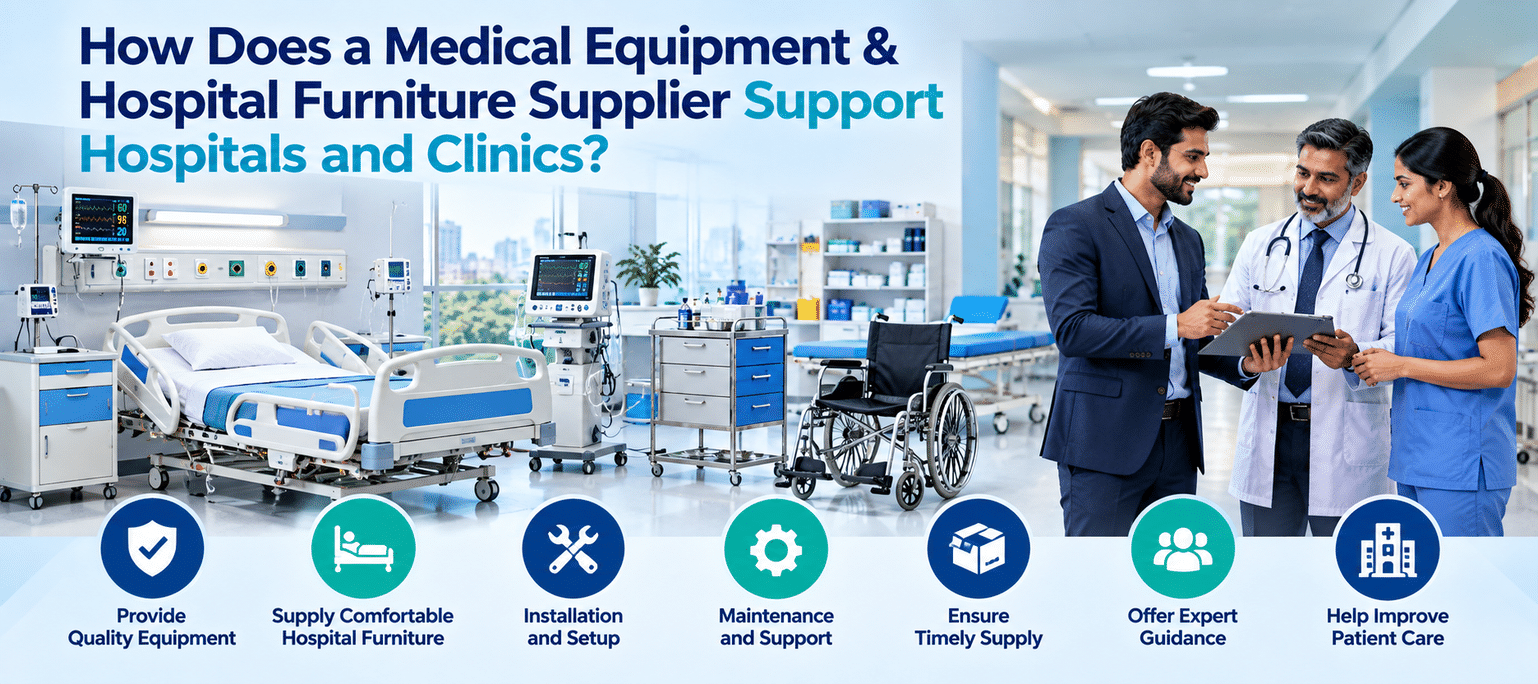
Healthcare facilities, from big multi-specialty hospitals to smaller neighborhood clinics, depend on a whole mix of medical gear and furniture to keep patient care safe, fast, and honestly a little more comfortable. Every area in a facility, like the emergency room, the ICU, a diagnostic lab, or just the general ward, has its own particular demands about equipment picking. Going after the right items, usually through a trusted Medical Carts Wholesale Supplier in the US, can really move the needle for day-to-day workflow, infection control, and patient results overall. In this piece, we’ll look at how different kinds of medical equipment and hospital furniture show up across settings, and why reliable sourcing matters more and more.
The Role of Medical Equipment in Daily Hospital Operations
Hospitals today run in a way that feels like a well-paced system, and a lot of the efficiency comes from having the right things in the right spot. For example, medical charts show up everywhere, almost like a quiet workhorse. Nursing desks lean on medication carts to move drugs safely, and dispense them without chaos. ERs lean on crash carts, loaded with lifesaving equipment that’s ready at a moment’s notice. Then housekeeping and sterile processing teams use utility carts to shuttle supplies, linens, and instruments between spots without messing up the clean zones. Since these carts get used, pushed, and cleaned all day, many hospitals try to buy in bulk from a dependable source, not one random order at a time. That’s why working with a reputable supplier is key to keep quality steady, and to stay aligned with healthcare safety rules across the facility.
Hospital Beds: The Backbone of Patient Care
If you ask me what furniture really sits at the center of recovery, it’s the hospital bed. But beds aren’t one size fits all, different departments want different bed types. General wards often go with manual or semi-electric beds, while ICUs usually need fully electric, multi position beds with side rails plus pressure relief features, because bedsores are a big risk for critically ill patients. Maternity units need beds built for labor and delivery, and pediatric spaces typically use smaller versions with extra safety. Partnering with a trusted Hospital Beds Supplier in the US helps ensure the beds meet required rules, support adjustable height and positioning so caregivers work more comfortably, and can handle years of sanitizing and heavy use, without turning into an uncomfortable problem for patients.
Mattresses: Often Overlooked, But Critical for Patient Comfort
People notice beds, but mattresses , sometimes they get treated like an afterthought. Yet mattresses are huge for recovery and pressure injury prevention. Long-term care spaces and ICUs, especially, may need specialized foam or air-based pressure relief mattresses to lower the chance of bedsores for people who can’t move much. General wards may stick to standard medical-grade mattresses that are easy to clean and resist moisture, which matters a lot for infection control. When hospitals source through a specialized Medical Mattresses Supplier, they can match mattress types to patient risk levels whether it’s a lower-risk patient who just needs normal support, or someone high-risk and bedridden while still keeping hygiene standards consistent across units.
Seating Solutions Across Departments
Chairs are another category where the “right” option changes fast depending on location. Waiting rooms need tough, wipeable seating for visitors and outpatients. Dialysis and infusion centers usually rely on reclining chairs made for longer sessions, because comfort is not optional. Doctors’ consultation rooms call for ergonomic seating for physicians and patients, while recovery rooms sometimes use transport chairs so staff can move patients safely between areas. A reliable Medical Chairs Supplier makes it easier to outfit each space correctly, keeping a balance between comfort and function, plus infection-control materials like antimicrobial upholstery, which really matters in clinical areas that stay busy all day.
How Equipment Needs Differ by Facility Type
Also, it’s good to remember that equipment and furniture needs don’t stay the same everywhere:
- Big hospitals usually need a wide, high volume selection , covering ICU beds, emergency carts, and everything in between because departments are many and patient acuity varies a lot.
- Clinics and outpatient centers often favor simpler, space-smart furniture like exam tables, basic seating, and mobile carts that speed up quick visits.
- Long-term care and rehab facilities tend to prioritize comfort first think pressure-relief mattresses and adjustable beds made for extended stays.
- Home healthcare providers often want compact, portable versions of hospital-grade equipment, so it can be moved and set up in a patient home without drama.
When administrators and procurement teams understand these differences, they tend to avoid the one size fits all trap, and make purchase decisions that actually fit the real workflow.
Top Medical Equipment & Hospital Furniture Supplier in US
Medical Equipment & Hospital Furniture Supplier it kind of forms the main base for how a healthcare place runs every day, whether it’s that large city hospital vibe or a smaller rural clinic. From carts and beds, to mattresses and chairs, each piece kinda has a job to do. A lot of them are life critical, and they also affect how smoothly staff move around. Picking the right products, and then picking the right supplier partners, can really shift patient results, staff workflow, plus long-term operating costs too. If you’re a healthcare admin trying to streamline procurement but still keep quality and compliance in place, it’s honestly smart to work with a proven and dependable supplier. mbkmed.com is one of those names, with a pretty wide catalog of medical equipment and hospital furniture solutions, built to fit the different needs of healthcare facilities across the country.
Frequently Asked Questions (FAQs)
- What types of medical carts are most commonly used in hospitals?
Usually you’ll see medication carts, crash carts, utility carts, procedure carts, and isolation carts. Each one is meant for particular department needs, not just random use. - How often should hospital mattresses be replaced?
Most medical grade mattresses should be checked often, and generally replaced every 3-5 years. And if you notice wear, tearing, or pressure relief performance getting weaker, then sooner is better, like no waiting around. - What’s the difference between manual and electric hospital beds?
Manual beds basically need physical cranking, like you turn it to change height and position, no shortcuts. Electric beds use motorized controls so the adjustments are faster and feel easier. This matters a lot in ICUs, and for patients with mobility issues, where even small movements are kind of a big deal. - Why is antimicrobial upholstery important for medical chairs?
Because antimicrobial materials can help reduce bacteria and the spread of infection. In busy clinical spaces, it makes routine cleaning more effective and safer, for both patients and staff, not just in theory, but in daily use too. - Can small clinics benefit from wholesale medical equipment suppliers?
Yes, absolutely. Even smaller facilities can often access wholesale pricing , bulk discounts, and consistent product quality, as long as the supplier is established and keeps delivering the same standards over time. - What factors should be considered when choosing a hospital bed?
You want to think about patient acuity, the adjustability features, and the weight capacity. Also consider how easy it is to clean, plus safety extras like side rails. Those details end up mattering more than people usually assume at first. - Are pressure-relief mattresses only necessary for ICU patients?
Not only. They can be really helpful for long-term care residents, post-surgical patients, and anyone with limited mobility who is at risk of pressure sores. So, it’s not just a ICU thing, though that’s where people notice it most. - How do I choose a reliable medical equipment supplier?
Look for a real track record, proper regulatory compliance certifications, strong after sales support, and a broad product line. This way, the supplier can match your facility needs as they grow, instead of forcing you to switch vendors later, which is never fun.