
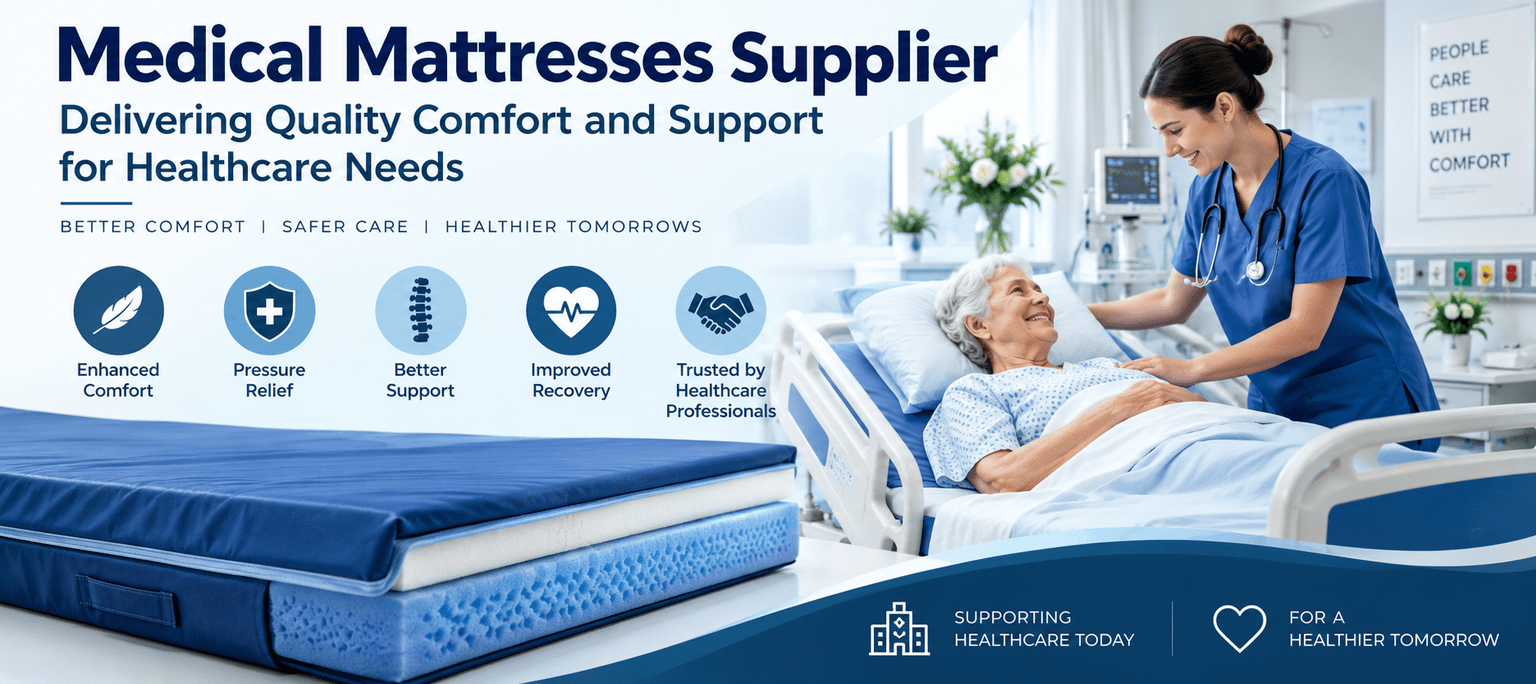
A good mattress is an important part of patient care. People who spend many hours in bed need proper comfort, support, and pressure relief. A reliable Medical Mattresses Supplier can help hospitals, care homes, clinics, and homecare providers choose mattresses that meet different patient needs. Medical mattresses are made to provide better body support than normal mattresses and can help reduce pressure on areas that stay under the body for a long time. At mbkmed.com, healthcare buyers can explore medical equipment and products designed for professional care settings. The right mattress should also be easy to clean, strong enough for regular use, and suitable for the bed being used. NICE recommends high-specification foam mattresses for adults at high risk of pressure ulcers, showing why the choice of mattress matters in patient care.
Why Medical Mattresses Are Important in Healthcare
Patients who stay in bed for long periods may need extra support and pressure management. A standard mattress may not provide the level of support required for some patients. Medical mattresses are designed with materials and structures that help spread body weight over a wider area. Pressure redistribution is especially important for people who have limited movement. NICE guidance states that pressure-redistributing devices can reduce or redistribute pressure, friction, and shear forces.
Some useful features to look for include:
- Pressure-relieving foam or air systems
- Strong and supportive construction
- Waterproof and easy-clean covers
- Breathable materials
- Suitable weight capacity
- Compatibility with healthcare beds
- Easy inspection and maintenance
A mattress should always be selected according to the patient’s needs, bed type, mobility, weight, and level of pressure-ulcer risk.
Choosing the Right Mattress with a Hospital Beds Supplier
A mattress works as part of the complete patient bed system. When buying healthcare equipment, it is useful to work with a trusted Hospital Beds Supplier that can help match the mattress with the correct bed. Different hospital beds may have different sizes, functions, and adjustment systems. A mattress should fit the bed correctly and work safely when the bed is raised, lowered, or adjusted. High-quality mattresses may include foam, memory foam, or dynamic air systems. Foam mattresses can provide pressure redistribution through their structure, while dynamic systems can change air pressure in different sections of the mattress.
Before ordering, buyers should check:
- Mattress size and dimensions
- Maximum user weight
- Type of bed frame
- Pressure care requirements
- Cover material
- Cleaning instructions
- Warranty and replacement support
Choosing the correct combination of bed and mattress can make daily care easier and provide a more comfortable experience for patients.
Features to Look for in Medical Mattresses
Healthcare mattresses need to handle regular use while supporting patient comfort and hygiene. A strong outer cover is particularly useful because mattresses can come into contact with moisture and other fluids. A waterproof cover can help protect the mattress core and make cleaning easier. Healthcare infection-control guidance also recommends waterproof covers and regular cleaning and maintenance of mattresses and pressure-relieving cushions. Breathable materials are another useful feature. They can help manage heat and moisture around the patient. Some specialist mattresses use vapour-permeable covers to support comfort and skin protection.
Other features can include:
- Non-slip bases
- Strong side walls
- Removable covers
- Welded seams
- Easy-to-clean surfaces
- Replaceable components
- Different pressure-care levels
The right features will depend on where the mattress will be used and the needs of the patient.
Buying Medical Carts Wholesale Supplier Products Alongside Mattresses
Healthcare facilities often need more than mattresses. They may also require carts and other equipment for moving supplies, medicines, instruments, and daily care items. Working with a Medical Carts Wholesale Supplier can make it easier for healthcare businesses to source several products for their facilities. Medical carts are available in different designs for different tasks. Some are made for general storage, while others are designed for specific healthcare activities. Buyers should consider the cart’s size, storage space, wheels, construction, and cleaning requirements before making a purchase.
Buying healthcare equipment from reliable suppliers can also help businesses maintain consistent product quality. For larger orders, wholesale purchasing may provide a practical way to manage stock and supply needs. When purchasing multiple products, it is useful to create a clear list of equipment requirements. This can include mattresses, beds, carts, chairs, and other items needed for patient care.
Medical Chairs Supplier and Complete Patient Care Equipment
Comfort and support do not stop at the bedside. Patients may also need suitable chairs for waiting areas, treatment rooms, recovery spaces, and care environments. A trusted Medical Chairs Supplier can provide seating designed for different healthcare settings.
At mbkmed.com, healthcare buyers can look for equipment that supports practical needs in professional care environments. Medical chairs should be stable, comfortable, easy to clean, and suitable for their intended use.
When selecting medical seating, consider the following:
- Strong and stable frame
- Comfortable seat and back support
- Easy-clean surface
- Suitable weight capacity
- Safe and practical design
- Easy movement when required
Good healthcare equipment should make everyday work easier for staff while helping patients feel safe and comfortable. Mattresses, beds, carts, and chairs all have different functions, but together they can support a better care environment.
Frequently Asked Questions About Medical Mattresses
- What is a medical mattress?
A medical mattress is designed for use in healthcare and care environments. It can provide extra support, comfort, and pressure redistribution compared with a standard mattress. - Who needs a medical mattress?
Medical mattresses may be useful for people who spend long periods in bed, have limited mobility, or have been assessed as being at risk of pressure ulcers. The appropriate type should be selected according to individual needs. - Are medical mattresses suitable for hospital beds?
Yes, many medical mattresses are designed specifically for hospital and profiling beds. However, buyers should always check the mattress size and compatibility before ordering. - What is a pressure-relieving mattress?
A pressure-relieving mattress is designed to redistribute pressure across the body. High-specification foam and dynamic air systems are examples of pressure-redistributing surfaces. - Are medical mattresses easy to clean?
Many healthcare mattresses have waterproof or fluid-resistant covers that are designed to make cleaning easier. Always follow the manufacturer’s cleaning and disinfection instructions. - Why is a waterproof mattress cover important?
A waterproof cover can help stop fluids from reaching the mattress core. This supports hygiene and makes routine cleaning easier. Proper mattress care is important for infection control. - Can medical mattresses help prevent pressure ulcers?
Some pressure-redistributing mattresses can help reduce pressure on vulnerable areas. However, a mattress is only one part of pressure-ulcer prevention. Regular assessment, repositioning, skin care, and appropriate clinical support are also important. - What should I check before buying a medical mattress?
Check the mattress dimensions, weight capacity, bed compatibility, pressure-care level, cover material, cleaning method, warranty, and supplier support. - Can I buy other healthcare equipment from the same supplier?
Many healthcare suppliers offer several types of equipment, such as beds, mattresses, chairs, carts, and other patient-care products. Buying from one supplier can make product sourcing easier. - How do I choose the best medical mattress?
The best mattress depends on the patient’s condition, mobility, weight, pressure-ulcer risk, bed type, and care setting. For patients with specific clinical needs, selection should be guided by an appropriate healthcare professional.