Choosing the right bed for a patient is one of the most important decisions in healthcare, no matter if the care happens in a clinic, or at home. A lot of buyers assume a hospital bed and a homecare bed are the same product, but honestly, they are built for totally different environments, different users, and different daily workloads. A trusted Hospital Beds Supplier can help you compare the options, and when you pair that choice with a quality Medical Mattresses, comfort, pressure relief, and long-term safety become a lot easier to manage. In this guide we will sort out the main differences, so you can buy with confidence.
What Is a Hospital Bed?
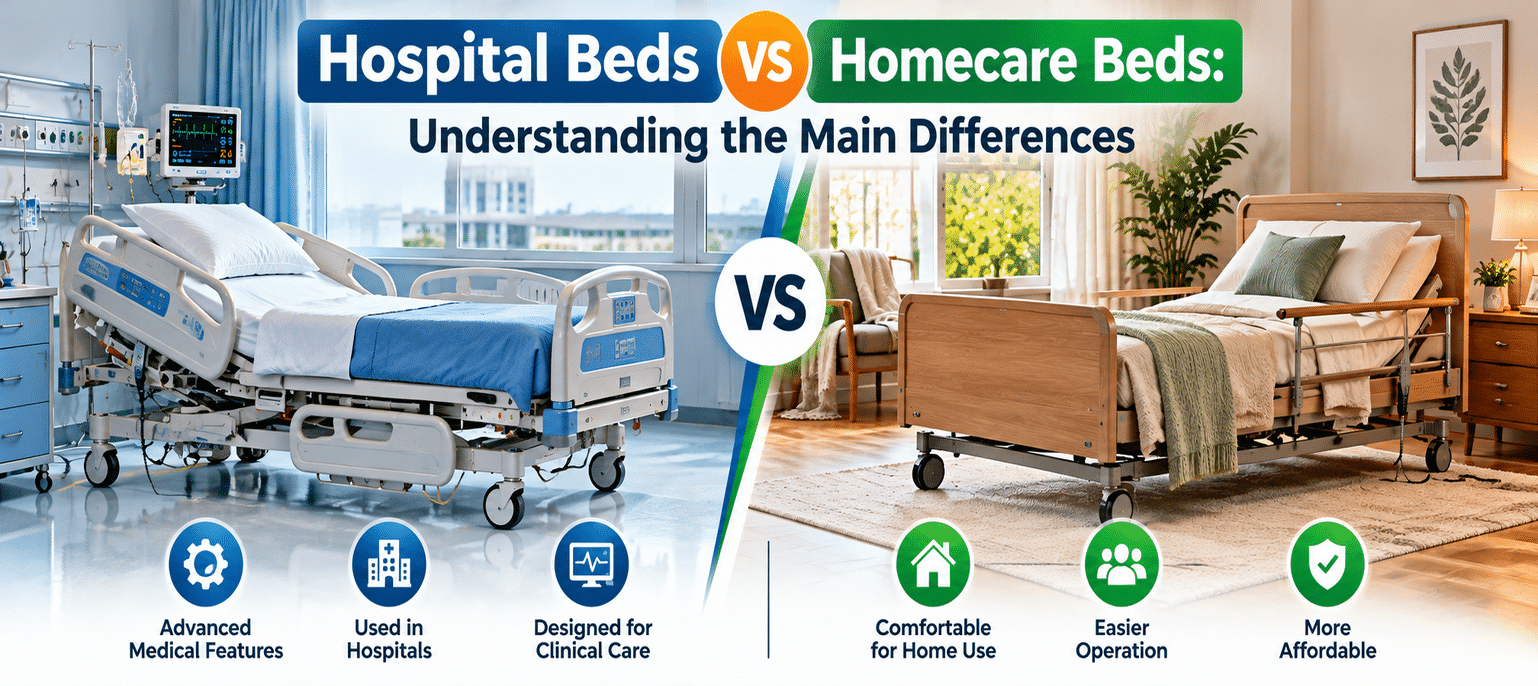
A hospital bed is a heavy-duty medical bed made for continuous use in clinical spaces like hospitals, nursing facilities, and intensive care units. It’s engineered for round the clock patient care, frequent repositioning, and use by many different patients over time, yeah.
Typical features often include:
• Fully electric height, backrest and knee adjustment
• Trendelenburg and reverse Trendelenburg positioning
• Integrated side rails and central braking systems
• Built-in nurse control panels and patient hand controls
• X-ray compatible sections and IV pole sockets
• High weight capacity, plus a reinforced steel frame
Because these beds are used by trained staff, they prioritise clinical function, durability, and cleaning ease over looks, or style.
What Is a Homecare Bed?
A homecare bed, sometimes also called a home medical bed, is made for people who need care in their own residence. These beds are for recovery after surgery, long term illness, ageing-related mobility problems, or even palliative care. They can still offer many of the same adjustments you’d expect from hospital beds, but in a more compact, quieter, and more home-friendly package. Homecare beds usually have softer finishes, wood-style headboards and footboards, and a smaller footprint so it fits in a bedroom without taking over the whole room. Since they are operated by family members or caregivers who might not have medical training, simplicity and safety are the big design goals.
Key differences Between Hospital Beds And Homecare Beds
Build Quality and Durability
Hospital beds are made for heavy nonstop use. They usually have thicker steel frames, and motors plus components rated for years of daily cleaning and disinfection. Homecare beds are intended for one patient, with lighter usage, so frames and motors are rated for lower duty cycles. They are still durable for home use, just not built for the constant pressure of a busy ward.
2. Adjustability and Functions
Hospital beds usually have a wider range of settings, like emergency CPR release, advanced tilt modes, and sometimes even built-in weighing. Homecare beds tend to handle the essentials only, things like head up, knee lift, and height changes. For a lot of home patients, these basic controls are just enough to support breathing, blood flow, overall comfort, and smoother transfers without too much fuss.
3. Size and Weight
Hospital beds often run bigger, and heavier as well, which keeps the whole unit stable, but it also makes it tougher to move or squeeze it through narrow doorways. Homecare beds are typically lighter, and sometimes split into modular pieces, so they can be taken apart, put back together, or transported with less hassle. If your bedroom space is tight, or the bed has to switch rooms later, a homecare model is often the more sensible option.
4. Design and Appearance
Hospitals lean into function and infection control, so hospital beds look pretty clinical, kind of stark. Homecare beds are built to match a home atmosphere, with warmer colors, wood-look panels, and usually quieter motors. Being in a familiar environment can help a patient stay calmer, and it may even support recovery overall. A trusted Hospital Beds Supplier can help you compare the options, and when you pair that choice with a quality Medical Mattresses Supplier, comfort, pressure relief, and long-term safety become a lot easier to manage.
5. Safety Features
Both types might include side rails and locking wheels, but hospital beds often come with extra safeguards, like bed-exit alarms, centralised braking, and more complex rail systems. Homecare beds generally emphasize entrapment prevention, reliable locking, and controls that are easier for non-professional caregivers to operate, or to understand quickly.
6. Mattress Compatibility
The mattress really matters as much as the bed frame. In hospitals, pressure-redistributing or alternating-air mattresses are very common for people at risk of bedsores. At home, foam and hybrid medical mattresses are more frequent, though air options are still picked for higher-risk cases. You should always match the mattress to the bed deck size, so there are no awkward gaps and the safety level stays solid. And a dependable Medical Chairs Supplier can also help finish the whole setup with patient seating, recovery chairs, or examination chairs.
7. Cost and Maintenance
Hospital beds usually cost more upfront, mostly because advanced parts and heavy-duty construction drive the price up, though they may last longer under intense use. Homecare beds are often cheaper, and many are available for either rental or purchase, so they fit better for short term or mid-range care. Maintenance at home is usually simpler too, mostly routine cleaning, then occasional checks on the controls and rails.
Which One Should You Pick
Your choice basically depends on where and how the bed will be used, kind of in a simple way but still. Like, think about the space first then the daily routine.
• Choose a hospital bed if you run a hospital, clinic, nursing home, or a rehabilitation centre, where multiple patients will use the bed, and more clinical functions are needed.
• Choose a homecare bed if you are caring for one person at home, and you want something comfortable, compact, and not too hard to operate.
• Think about the patient’s condition, including body weight, movement ability, the chance of pressure injuries, and how much caregiver support is actually available.
• Before you buy, check room dimensions, and also power access, so the bed can be installed safely, without surprises later.
Also, in facilities that set up full care areas, you usually need more than beds. Keeping things stocked like crash carts, treatment trolleys and dressing carts with a dependable Medical Carts Wholesale Supplier helps keep nursing stations organised, speeds up response times, and can reduce equipment costs when you purchase in bulk.
Conclusion: Choose a trusted Hospital Beds supplier
Hospital beds and homecare beds both matter, for patient comfort and recovery but they’re kinda made for different situations, yes. Hospital beds are usually built around durability, advanced functions, and clinical-grade safety for busy healthcare settings, and you know, a lot of everyday use. Homecare beds on the other side tend to be more budget-friendly, a bit more compact, and somehow more “comfortable” for recuperation at home. If you work with an experienced Hospital Beds Supplier, it becomes easier to match the right bed, mattress, and accessories to your exact situation. For quality medical furniture, solid direction, and dependable service, visit mbkmed.com.
Frequently Asked Questions (FAQs)
1. What is the biggest difference between a hospital bed and a homecare bed?
A hospital bed is meant for heavy, continuous use in clinical spaces with more advanced functions, while a homecare bed tends to be lighter, quieter and made for a single patient at home.
2. Can a hospital bed be used at home?
Yes, but they’re often larger and heavier, so you’ll need enough room, sturdy flooring, and reliable power access. Still, many families prefer smaller homecare models, and that’s pretty common.
3. Are homecare beds electric?
Many of them are. Electric homecare beds can adjust the head, knee, and bed height with a button, while manual versions rely on hand cranks and usually cost less.
4. What type of mattress is best for a medical bed?
It really depends on the patient’s risk level. Foam mattresses can be okay for general comfort, but alternating-pressure or air mattresses are often suggested for people who may be prone to bedsores.
5. How much weight can a hospital bed hold?
Most standard hospital beds support roughly 200 to 250 kg, and bariatric versions can handle more. Always double-check the manufacturer’s own specifications.
6. Should I rent or buy a homecare bed?
Renting is useful for short-term recovery, while buying is often more cost-effective for long-term, or ongoing care.
7. How do I maintain a medical bed?
Clean and wipe surfaces regularly with an appropriate disinfectant. Also check rails, wheels, and controls, and keep the motor + cables away from moisture or accidental damage.
8. What should I look for when choosing a supplier?
Look for product certifications, a broad catalog of beds and mattresses, warranty coverage, strong after-sales support, and whether they can also supply connected items, like chairs and carts.