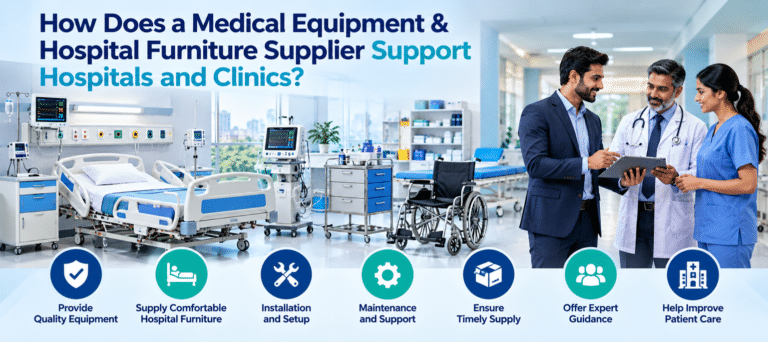
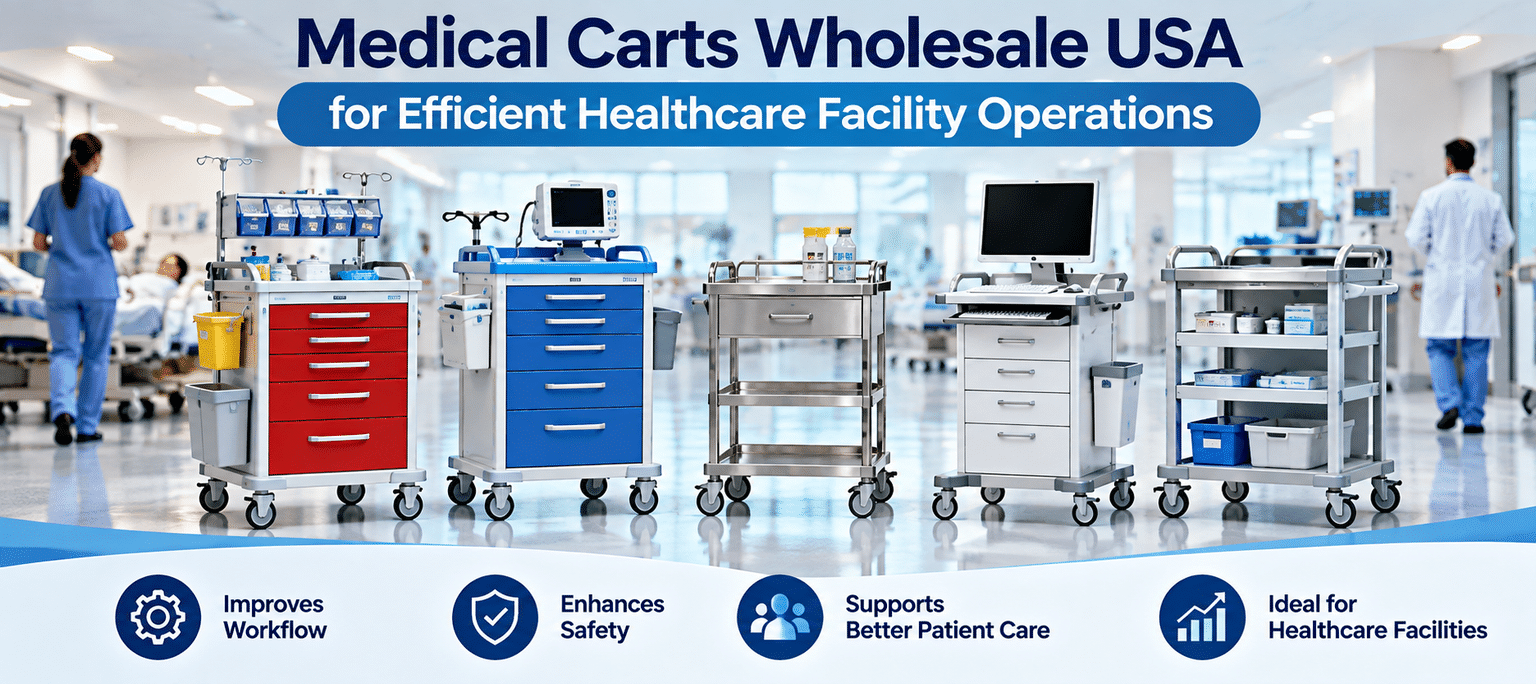
Healthcare facilities need simple and reliable equipment to keep daily work organized. Medical Carts Wholesale USA options can help hospitals, clinics, nursing centers, and other healthcare facilities manage supplies and equipment in a better way. A medical cart can provide easy access to items while staff move between patient rooms and care areas. Different carts are made for different needs, such as storing medical supplies, medicines, instruments, or emergency items. MBK Med offers medical equipment solutions for healthcare environments where quality, easy movement, and practical storage are important. A good cart should be easy to move, simple to clean, and strong enough for regular use. AHRQ notes that mobile healthcare equipment should be easy to move and handle, especially in patient rooms and smaller spaces.
Why Medical Carts Are Important in Healthcare
Medical carts can make daily healthcare work more organized. Instead of keeping important supplies in different places, staff can keep commonly needed items together and move them to the required area. This can save time and make routine tasks easier.
Some common benefits of medical carts include:
• Easy movement between rooms and care areas
• Better organization of medical supplies
• Convenient storage for daily-use items
• Less need to carry supplies by hand
• Easy access to equipment when needed
• Support for better workflow in busy healthcare areas
The size of a cart is also important. A cart that is too large may make movement difficult in patient rooms or narrow areas. AHRQ research has highlighted the importance of equipment being easy to move and manipulate inside patient rooms. For this reason, healthcare buyers should look at the available space, type of work, storage needs, and frequency of movement before choosing a cart.
Choosing the Right Medical Equipment for Hospitals
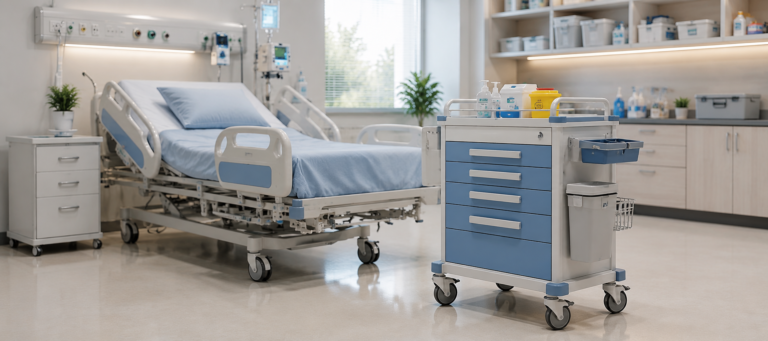
Healthcare facilities often need more than medical carts. Hospitals and clinics may also require beds, stretchers, mattresses, and other equipment for patient care. When buying equipment, it is useful to consider the facility size, number of patients, available space, and daily workload. A Hospital Beds Supplier in USA can provide different bed options for hospitals, clinics, nursing facilities, and other care settings. Hospital beds are an important part of patient care, so buyers should check the bed design, adjustment options, safety features, weight capacity, and ease of cleaning before making a purchase.
Medical carts and hospital beds should also work well with the space available inside the facility. Doorways and corridors need enough room for equipment to move safely. AHRQ guidance for healthcare facilities specifically considers whether doors and corridors are wide enough for gurneys and stretchers.
Choosing equipment based on the real needs of the facility can help staff work more comfortably and keep patient areas better organized.
Features to Look for in Medical Carts
Not every medical cart is made for the same purpose. Some are designed for general storage, while others are made for specific healthcare tasks. Buyers should understand how the cart will be used before selecting a model.
Important features to consider include:
Strong construction: A cart should be made from materials that can handle regular healthcare use.
Smooth movement: Quality wheels and casters can make it easier to move the cart between rooms.
Storage space: Drawers, shelves, and compartments can help keep supplies organized.
Easy cleaning: Smooth surfaces are useful because healthcare equipment needs regular cleaning.
Safety and security: Depending on the purpose, some carts may need locking drawers or other security features.
Practical size: The cart should fit comfortably through doors and around other equipment.
Easy access: Frequently used supplies should be simple for staff to reach.
A cart should support the work of healthcare staff rather than create extra problems. In busy environments, practical design and easy movement can make a noticeable difference in daily tasks.
Stretchers and Gurneys for Patient Transport
Patient transport is another important part of healthcare operations. Hospitals, emergency departments, clinics, and other medical facilities may need equipment that helps move patients from one area to another. Stretchers Gurneys Wholesale Distributor options can help healthcare buyers source equipment for patient transport in larger quantities. Stretchers and gurneys are commonly used for moving patients through hallways, treatment areas, emergency departments, and other parts of a healthcare facility. Their size and design should match the facility’s available space and daily requirements.
When choosing patient transport equipment, buyers can consider:
- Wheel and caster quality
- Frame strength
- Patient weight capacity
- Mattress or patient support surface
- Side rails and safety features
- Ease of movement
- Cleaning and maintenance needs
Healthcare facilities should also consider corridor and doorway space before purchasing large transport equipment. AHRQ facility guidance includes doorway and floor suitability for gurneys and stretchers as part of site planning.
Medical Mattresses and Other Patient Care Products
Patient comfort and proper support are important parts of healthcare equipment planning. Medical mattresses are used with different types of beds and may be needed in hospitals, nursing facilities, clinics, and home-care environments. Facilities looking to Buy Medical Mattress Online should first understand the type of mattress needed for their beds and patient care requirements. Important points can include mattress size, material, support level, cover design, cleaning needs, and compatibility with the bed.
MBK Med can also be considered when healthcare buyers are looking for medical equipment and patient-care products. Before ordering, buyers should check the product specifications carefully to make sure the mattress matches the intended bed and use. It is also useful to maintain medical equipment properly. Regular cleaning, inspection, and maintenance can help equipment remain ready for use. The right products, when selected according to actual facility needs, can support a more organized patient-care environment.
Frequently Asked Questions About Medical Carts
1. What are medical carts used for?
Medical carts are used to store, organize, and move medical supplies, equipment, medicines, or other healthcare items. The exact use depends on the cart design and healthcare setting.
2. Who can use medical carts?
Hospitals, clinics, nursing facilities, emergency departments, laboratories, and other healthcare settings can use medical carts for different daily tasks.
3. What should I check before buying a medical cart?
Check the cart’s size, construction, storage space, wheels, cleaning requirements, weight capacity, and any security features needed for your work.
4. Are medical carts easy to move?
Many medical carts are designed with wheels or casters for movement. However, ease of movement depends on the cart design, load, floor surface, and wheel quality.
5. Why is the size of a medical cart important?
The cart should fit the available space and move easily through doors, corridors, and patient rooms. AHRQ has noted that oversized mobile equipment can create movement challenges in smaller spaces.
6. Can medical carts be used in emergency areas?
Yes. Some medical carts are designed for emergency or urgent-care use. The correct type depends on the supplies and equipment that need to be stored.
7. What other equipment may hospitals need with medical carts?
Hospitals may also need hospital beds, stretchers, gurneys, medical mattresses, and other patient-care equipment based on their services and facility requirements.
8. What should I consider when buying hospital beds?
Consider bed size, adjustment features, safety features, weight capacity, cleaning needs, and compatibility with the space where the bed will be used.
9. How do I choose a medical mattress?
Check the mattress size, material, support, cover, cleaning requirements, and compatibility with the hospital or medical bed before ordering.
10. Why should healthcare facilities buy equipment from a reliable supplier?
A reliable supplier can make it easier to compare suitable equipment, understand product specifications, and choose products that match the facility’s actual requirements.